The Gold
Compendium
Everything I wish someone told me about making gold
Patch 12.0 · Launch Buy me a coffee🆕 New Player Basics
Everything you need to know before your first auction — skip if you're experienced
This is your entire roadmap for the first hour. Follow these 5 steps and you'll have your first gold pile by tomorrow:
- Pick Herbalism + Mining at the trainer in Silvermoon City (or your starting capital). No investment needed.
- Buy green profession equipment from the AH. Should cost under 500g total for both professions.
- Fly a loop around southern Eversong Woods gathering everything you see. Spend 30-60 minutes collecting herbs and ore.
- Return to the AH and list everything using "Post at Market Price" for simplicity. Don't overthink pricing — let the AH set it.
- Check the AH next day — your gold has arrived. Repeat daily, selling everything on Tuesdays for peak prices.
Expected results: Week 1 casual farming = 10k-30k gold. This method is boring but reliable. It's your foundation for everything else.
The AH is the central marketplace for trading items. Find an Auctioneer NPC (gavel icon on your map) to list items for sale or browse listings. When your item sells, Blizzard takes a 5% cut and you pocket the rest. Commodities (herbs, ore, cloth) trade on a region-wide AH with massive volume and competition. Crafted gear is server-specific, so competition is localized. Understanding which market you're competing in is essential for pricing.
Every Tuesday, mythic+ and raid instances reset. Guilds panic-buy consumables, and prices spike hard through Wednesday. By the weekend, supply floods and prices tank. This weekly cycle is the single most important pattern in gold-making — see Timing Is Everything in Fundamentals for the full breakdown.
Each character gets two primary profession slots and unlimited secondary slots. Primary professions: choose two from Herbalism, Mining, Skinning, Alchemy, Enchanting, Blacksmithing, Jewelcrafting, Tailoring, Inscription, Leatherworking, Engineering. Secondary professions (Fishing, Cooking, Alchemy counts as both) can be done on every character without taking slots. Smart pairing: Herbalism + Alchemy (gather herbs, craft potions), Mining + Jewelcrafting (gather ore, cut gems), or pair any gathering with a crafting profession.
Perception increases your chance of rare procs like Nocturnal Lotus — stack this early for maximum profit on rare drops. Finesse increases the quantity of materials you gather per node and chance of higher-quality gathers — stack this for volume farming. Deftness speeds up gather time slightly. Priority: Perception first (big profit multiplier), then Finesse for grinding efficiency.
Download CurseForge desktop app, search for addon names (TradeSkillMaster, CraftSim, Routes, GatherMate2, Auctionator), click install. WoW automatically loads them on login. These aren't cheating — they're information tools that level the playing field. Addon-less gold-making is viable but handicaps you significantly compared to experienced players. Install the essentials before you start farming.
Profession gear dramatically affects crafting speed and quality. Understanding the tiers helps you plan your equipment progression:
- Green (Uncommon) Equipment: Tradeable on the AH. Buy cheaply and upgrade as you level. Easy to acquire but minimal stats.
- Blue (Rare) Equipment: Bind on Pickup from Crafting Orders only. Can only obtain through work orders on these items. Superior stats compared to green gear.
- Epic Equipment: Bind on Pickup from Crafting Orders only. Highest-tier profession gear with excellent stat bonuses. Difficult to obtain — requires high-rank crafters and premium materials.
- Strategy: Start with green AH gear while leveling. As you unlock better recipes and can take higher-tier crafting orders, invest in blue/epic gear for the stat benefits. The stat bonuses stack across all your professions, so prioritize your most profitable professions first.
The Warband Bank is shared storage accessible from all your characters. Use it to move materials and gold between toons. Strategy: gather on your main, send materials to a dedicated crafter alt, then consolidate all gold into your banking alt. This lets you scale up farming (main stays on gathering instead of selling), and you accumulate capital for bigger flipping operations. Without Warband Bank, each character's economy is isolated — with it, you're managing an account-wide operation.
Don't compare yourself to endgame goblins — here are realistic benchmarks for new players:
- First week (casual): 10k-30k (from questing + vendoring + selling a few herbs)
- First week (focused farming): 50k-150k
- First month (casual): 100k-300k
- First month (dedicated farming): 500k-1M+
Gold cap: 10,000,000 per character (Warband shared) — you won't hit this for months.
For reference: WoW Token costs ~200-300k gold (varies by week). If you make 50k in week 1, that's 1/5 of a token — solid progress.
Golden rule: Don't compare yourself to r/woweconomy goblins — they play the AH like a full-time job and have months of capital stacked. You're starting from zero, and that's fine.
⚔ Gold-Making Fundamentals
The stuff that actually matters — ignore this and you'll stay broke
If you're only doing one thing to make gold, you're one hotfix away from being broke. Markets crash, farms get nerfed, and that herb that was 50g yesterday is 5g today. Spread your gold-making across a few different methods so when Blizz inevitably nerfs your favorite farm, you've got backup.
Seriously, track your GPH. If you're flying loops for 2 hours and earning less than you could from other methods, switch strategies. Every minute spent farming is a minute not spent on something more profitable. Time is your most finite resource — don't waste it on low-GPH activities.
Tuesday reset is the highest-demand day for consumables and gear. Raid groups panic-buy flasks, potions, enchants, and repairs. Prices spike hard on Tuesday-Wednesday. Gather early in the week when supply is abundant and prices are low, then sell everything into the Tuesday demand spike. This timing pattern repeats every single week.
This one separates the rich from the broke. Spend a week just watching your server. Where do prices go? When do they tank? The AH rewards patience and punishes panic. Don't be impulsive.
Midnight makes several streamlining changes to the profession systems that affect all gold makers. Understanding these changes is crucial for efficient profit:
- 2 Quality Levels for Consumables: Down from 3 tiers. This simplifies crafting and reduces the complexity of quality target calculation while maintaining profit differentiation.
- Artisan's Moxie (New): Replaces Artisan's Acuity. This new currency is profession-specific — you can't share Alchemy Moxie with Enchanting. Plan knowledge builds around Moxie acquisition for each profession.
- Crafting Orders at Midnight Skill 15: Unlocked at just skill level 15 in any Midnight profession (not overall skill — just 15 points in your Midnight expansion track). This means you can start taking crafting orders within minutes of picking up a new profession and earning commission gold on your first hour of leveling.
- Patron Orders Contain Ingenious Identifier: New currency item that drops from patron crafting orders, useful for niche crafting requirements.
- Reagent Bags in Dedicated Slot: New dedicated slot for reagent bags separate from regular bags, allowing you to carry more actual materials without bloating inventory.
- Large Stack Sizes: Materials stack to 1000, consumables stack to 200. This means you need far fewer bag slots to store bulk materials compared to previous expansions.
⚡ Quick Start Tier List
Compare all strategies at a glance — click any row for the full breakdown
Click any row to expand the full breakdown with expected gold, startup costs, and step-by-step instructions.
| Strategy | Effort | Startup | GPH Range | Tier |
|---|---|---|---|---|
| 🌿 Dual Gathering | ●●○○○ | ●○○○○ | 6k–30k | Beginner |
| The ultimate beginner strategy with zero complexity. Herbalism and Mining require no crafting knowledge, no material investment, and no risk. Gather herbs and ore, fly around zones, dump everything on the AH on Tuesday for peak prices. You'll make steady gold while learning the economy. It's not the absolute highest GPH, but consistency and reliability beat optimization when you're learning. | ||||
| 🏰 The Motherlode | ●○○○○ | ●○○○○ | 10k–17k | Beginner |
| The Motherlode!! is a BFA dungeon in Kezan (queue via Group Finder or walk directly). Solo at level 90 with ease — pull everything, AoE it down, vendor all drops instantly for pure gold. Note: 10 instance-per-hour lockout applies — run it 10 times then switch to another dungeon. Other good vendor-trash dungeons: Freehold (BFA), Atal'Dazar (BFA), any Legion dungeon. This is raw, risk-free gold with zero AH interaction needed. Perfect for alts with no professions. | ||||
| 🧪 Alchemy Consumables | ●●●○○ | ●●●○○ | 10k–50k | Intermediate |
| Alchemy prints gold because raiders need consumables every single week — it's recurring demand you can set your watch to. Focus on Flask of Alchemical Chaos and Algari Healing Potion as your bread-and-butter sellers. Buy herbs in bulk Sunday/Monday when farmers dump supply, craft Tuesday morning before reset, and list at peak raid-prep prices (Tuesday 2–6PM server). Rank 3 recipes are where the real margins live — each rank reduces material cost while selling at the same price. Get your Alchemist's Research weekly and prioritize flask/potion Knowledge Points. Procs from Resourcefulness and Multicraft effectively give you free inventory. Pair with Herbalism on an alt to vertically integrate your supply chain and cut herb costs by 40–60%. | ||||
| 🧵 Cloth Farming | ●●●○○ | ●●○○○ | 8k–30k | Intermediate |
| Cloth is gated behind Tailoring — only characters with the profession can loot Weavercloth from humanoid mobs, which keeps supply low and prices permanently elevated. Your best farm spots are open-world humanoid packs in Eversong Woods, the Zul'Aman highlands, and Harandar where mobs respawn fast and cluster tightly for AoE. Melee classes with strong burst AoE (Ret Paladin, DH, Warrior) are ideal. A focused 30-minute cloth run should net 150–250 Weavercloth depending on competition. Sell raw cloth during crafting rushes (Tuesday/Wednesday) when Tailors are buying materials, or level Tailoring yourself to convert cloth into Weavercloth Bolts for higher margins. Cloth prices spike hard after new raid tiers when crafters scramble for Embellishment materials. Stack the Finesse stat on your gathering tool for bonus drops per node. | ||||
| 📈 AH Flipping | ●●●●● | ●●●●○ | Unlimited | Advanced |
| AH flipping is buying underpriced items and relisting at market value — the most scalable gold method in the game, but it requires capital, patience, and market knowledge. Start with consumable flipping: scan for flasks, potions, and enchants listed 15–20% below regional average. Buy Sunday night, relist Tuesday afternoon. Material flipping works the same way — herbs and ore crash on weekends when farmers dump stock, then rebound midweek when crafters buy. The advanced play is reset flipping: buy out an entire item's supply when it dips below crafting cost, then relist everything at a controlled price. This is high-risk but can yield 100k+ in a single move. Key rules: never invest more than 20% of your liquid gold in one flip, always check the item's sale rate on Undermine Exchange, and accept that some flips will lose money — your win rate just needs to be above 60%. | ||||
| ⚒ Max-Rank Crafting | ●●●●○ | ●●●●● | 5k–100k | Advanced |
| Max-rank crafting is the endgame of gold-making — you invest heavily into Knowledge Points to unlock Rank 5 recipes, then charge premium prices because few crafters can match your output quality. The Crafting Order system is your money printer: players submit orders for specific gear, and if you're one of the handful of crafters on your server who can hit Rank 5 on high-demand items like Embellished gear, Enchanted Crests, or epic weapons, you set the commission. Early-season commissions for BiS crafted gear can hit 30k–100k per order. Focus your Knowledge tree narrowly — don't spread points across everything. Pick one high-demand niche (Leatherworking armor, Blacksmithing weapons, Jewelcrafting gems) and max it out first. Use your Midnight treatises and weekly knowledge quests religiously. The startup cost is real (50k–200k in materials to level up + weeks of time-gated knowledge), but once you hit max rank in a popular slot, you're printing gold on autopilot through the order table. | ||||
⛏ Gathering Professions
Zero startup, reliable income — the best entry point for new or returning players
Blizzard's restrictions on multiboxing and bot enforcement have significantly reduced automated supply flooding the market. This means solo gatherers now enjoy better prices and less competition than they did in previous expansions. Gathering profitability is genuinely high because bot supply is down and legitimate demand is up.
- Tauren: +5 gathering skill, 25% Deftness bonus
- Dracthyr: +2% Perception
- Earthen: +2% Finesse
- Kul Tiran: +2 to all profession skills
Node modifiers work the same way across Herbalism, Mining, and Skinning — elemental modifiers add special mechanics and mote drops. See Herbalism section for details on Lightfused, Wild, Primal, Voidbound, Lush, and Transplanted nodes.
🔨 Crafting Professions
High investment, highest ceiling — filter by category to find your niche
Concentration is a limited resource that guarantees a higher quality result on any craft. It regenerates slowly over time across your account. The profit difference between a Rank 4 and Rank 5 craft can be 10x or more — use Concentration strategically on high-value crafts where the quality jump has the biggest price impact. Never waste it on low-margin items. This single mechanic separates profitable crafters from break-even ones.
This is the economic foundation that powers the entire WoW gold-making ecosystem. Understanding what raiders spend reveals where profit opportunities hide:
- Flasks: 500-2000g per raid night (varies by flask type and prices)
- Potions: 200-1000g per raid night (2+ per pull × 20+ pulls minimum)
- Food/Feasts: Free if guild provides; 500g if buying individually
- Augment Runes: Obtained from reputation vendors or drops — not an AH expense, but Cutting Edge guilds expect them
- Enchants: One-time cost per gear piece: 2-15k each (5-6 slots per character)
- Repair Costs: 500-1000g per progression night (wipes cost gold)
- Weekly Total:
- Casual raider: 5k-10k per week
- Hardcore/CE pusher: 15k-30k+ per week
Key insight: This is the demand engine that powers the entire WoW economy. The more raiders your server has, the more gold you can make by supplying their needs. This is why consumable prices spike on reset day — all these expenses hit at once.
Enchants are mandatory, and raiders prioritize them in a specific order. Understanding this hierarchy helps you predict demand spikes:
- Weapon Enchant (MANDATORY): The biggest stat boost. Every raider enchants their weapon first. Most expensive per-item cost.
- Ring Enchants x2 (MANDATORY): Every raider needs both rings enchanted. 2 per character = massive volume.
- Chest Enchant (High Priority): Large stat boost, applies to main armor piece.
- Bracer Enchant (Medium Priority): Good stats, purchased after the essentials are covered.
- Cloak Enchant (Medium Priority): Optional for many builds but some specializations need it.
- Boot Enchant (Lower Priority): Stat vs. speed tradeoff. Purchased last, many raiders skip this.
Sales strategy: Stock weapon and ring enchants first — these have guaranteed demand. Chest enchants follow. Don't waste crafting resources on boot enchants in week 1; focus on high-priority items where demand is unlimited.
The Runed Crest system fills 2 gear slots with a spark, making crafted gear temporarily BiS (Best in Slot) during the early weeks:
- Week 1-2: Crafted gear is BiS in most slots (Heroic raid equivalent). Prices peak. Demand is highest because raiders want immediate upgrades.
- Week 3-4: Mythic raid drops start replacing crafted pieces. Prices crater as raiders no longer need them.
- Rule of thumb: Sell crafted gear HARD in weeks 1-3. Don't hold inventory past week 3 expecting prices to recover.
- Rank 5 premium: Rank 5 crafted gear commands premium tips in crafting orders because it minimizes the power loss compared to raid drops. Prioritize investing Knowledge Points to reach Rank 5 early.
Pro strategy: Identify which gear slots have the longest "BiS window" (e.g., trinkets stay valuable longer than armor). Prioritize crafting those slots first.
What raiders actually spend gold on = what you should be selling. Understanding raider demand drives every profitable gold-making strategy:
- Flasks: Thallasian for combat stats, Haranir for professions. Raiders burn through these nightly.
- Combat Potions: Light and Void variants for damage/healing during key pulls. 20+ pots per raid night per player.
- Stat Food / Feasts: Guilds provide feasts; individual raiders buy food for pre-raid buffs. Massive weekly volume.
- Augment Runes: Obtained from reputation vendors and drops (not craftable). Essential for Cutting Edge guilds. Check the K'aresh Trust vendor for the permanent Ethereal Augment Rune.
- Weapon & Armor Enchants: 1-per-character cost, but mandatory. Rings get double enchants. Total demand: 2-15k per character.
- Phials: Persistent potions lasting entire encounters. Different stat types for different specs.
Key insight: The more you understand what raiders need weekly, the more profitable your craft specializations become. If you can supply cauldrons, you have a guaranteed customer base.
The most reliably profitable crafting profession across every expansion. Flasks, potions, and cauldrons are consumed by every raider and M+ player weekly, creating constant demand. Alchemy also provides housing dyes for the decor market and has unique proc mechanics that generate free bonus items on crafts.
- Flasks and phials for raiders (constant demand)
- Combat potions (used in M+ and raids)
- Cauldrons for guild groups (high material cost, high profit margin)
- Transmutations for daily cooldown profit
- Housing dyes for recoloring decor items (new Midnight niche)
- Treasure-finding potions (if available) — a goblin staple that increases gold/material drops from mobs. Check Wowhead for the Midnight equivalent at launch
Spec Trees: Potion Prowess, Fluent in Flasks, Transmutation Authority, Alchemical Mastery
Major System Change: Midnight removes the Experimentation system. Recipes are now bought directly from Camberon's Cauldron using materials + Moxie prerequisites. This streamlines recipe acquisition — no more RNG on what recipes you unlock.
New Mechanic: Convert leftover Flasks and Potions into Stabilized Derivate, a key crafting material. This system means you can recycle mistakes or overstock into useful materials, adding flexibility to your alchemy farm.
At level 80 Alchemy, you unlock housing decor recipes. These are expensive (requiring Lumber among other materials) but provide a new income stream in the housing market.
System Change: Artisan's Acuity is replaced by profession-specific Artisan's Moxie. This new currency is specific to each profession — you can't share Alchemy Moxie with Enchanting, for example. Plan your Knowledge builds around Moxie acquisition.
Transmutation Path (Dailies): Wondrous Synergist daily CD = highly sought after for Cauldrons + Decor. Build: Transmutation Authority → Synthesis Synergy → Metamorphic Mastery for Multicraft
Potion Prowess Path (Volume): Light potions first (easier recipes/mats), then Void potions. Build: main wheel → Path of Light → Prolific Potioneer
Fluent in Flasks Path (Raid Demand): Haranir flasks early (profession buffs for leveling), Thallasian flasks for raids/M+. Build: main wheel → Haranir Secrets → Phial Abundance
- Goblin: +5 Alchemy skill
- Kul Tiran: +2 to all profession skills
Start with Silvermoon Health Potion (basic recipe) → Recycle the results into Entropic Extract → Craft Enlightenment Tonic → Specialize into Transmutation Authority at 50+ for daily profit loops.
Alchemists have a chance to proc extra items when crafting flasks and potions — this is a significant part of why Alchemy is Tier S. The Mixology passive also doubles your own flask duration, saving gold on personal consumables. Both effects scale with your specialization investment, so deeper spec = more free items over time.
Important for market sizing: Players with Alchemy get 100% increased flask duration (2 hours instead of 1). This means raiders WITH Alchemy buy half as many flasks. Your total addressable market for flask sales is smaller than raw raider count suggests. However, most raiders don't have Alchemy on their main — they're running combat professions. So demand is still high, just not unlimited.
Cauldrons are the single biggest guild consumable expense. Each cauldron requires a Wondrous Synergist (daily cooldown craft) and feeds the entire raid group flasks. Guilds burn through 2-5 cauldrons per raid night, meaning consistent weekly demand. If you specialize in the Transmutation path to unlock Wondrous Synergist, you have a guaranteed customer base of every raiding guild on your server. This is why Transmutation Alchemy builds are so lucrative — you're not competing on volume, you're fulfilling essential weekly guild needs.
Enchanters profit from two angles: selling weapon and armor enchants (always in demand when players get new gear), and crafting Enchanted Crests used for upgrading high-tier gear. Mana Oils provide another steady revenue stream. Disenchanting cheap crafted items for materials is also a reliable source of enchanting reagents.
- Weapon enchants (big seller every reset)
- Enchanted Crests for gear upgrades
- Mana Oils for temporary weapon buffs
- Disenchanting cheap gear for materials
Spec Trees: Elevating Equipment, Transitories Tonics and Tools, Disenchanting Delegate, Spellbound Shatterer
High-end crafted plate armor and weapons command top gold through crafting orders. Requires significant Knowledge Point investment to reach max rank, but the per-item profit is substantial once you get there. Alloy conversions provide a daily cooldown income source while you build toward max rank.
- Crafted weapons and plate armor (crafting orders)
- Alloy conversions for daily profit
- Sharpening stones and weapon enhancements
- Housing decor (metal furniture, weapon racks, anvils)
Spec Trees: The Old Ways, Armorsmithing, Weaponsmithing, Craftsmithing
Nearly all gear can have gem sockets in Midnight, making Jewelcrafting relevant for the entire playerbase. Cut gems sell in massive volume, while JC-exclusive embellishments and crafted jewelry provide high-ticket crafting order income. Prospecting ore for rare gems adds a gambling element with potentially huge payoffs.
- Cut gems for every gear slot (massive volume)
- JC-exclusive embellishments
- Prospecting ore for rare gems
- Crafted jewelry via crafting orders
- Housing decor (gem-studded items, crystal displays, chandeliers)
Spec Trees: Thoughtful Throughput, Glamorous Gems, Alluring Accessories, Proficient Processor
Tailoring gives a massive advantage for cloth farming in Midnight: while all players can loot cloth from mobs, Tailors with points in the Fabric Specialist tree get significantly higher drop rates and access to rare cloth types. This makes Tailoring function as both a gathering and crafting profession — sell raw cloth for easy gold, or craft it into armor, bags, and spellthreads for higher margins.
- Exclusive cloth drops (sell raw or craft)
- Crafted cloth armor and embellishments
- Spellthread leg enchants
- Bags (evergreen market)
- Housing decor (tapestries, curtains, cloth furnishings)
Spec Trees: Sin'dorei Finery, Nimble Needlework, Fabric Specialist, Fiber Arts
Scribes produce Vantus Runes (weekly raid buff items that sell well on reset day), Missives for stat customization on crafted gear, and Darkmoon trinket cards. The real passive income comes from Treatises — every crafter in the game needs one per profession per week for their +1 Knowledge Point, creating enormous and consistent demand.
- Vantus Runes (weekly raid buff items)
- Missives for stat customization
- Treatises — weekly KP items every crafter needs (+1 Knowledge Point per profession per week). Guaranteed passive sales
- Contracts for reputation gains
- Darkmoon trinket cards
- Housing decor items (scrolls, paintings, banners) and contracts
Spec Trees: Calm Hands, Blueprints, Perfected Products, Darkmoon Curiosity
Every crafter in the game needs one Treatise per profession per week for +1 Knowledge Point. With thousands of crafters on every realm, demand is essentially infinite and consistent. Treatises are your primary passive income source as a Scribe — craft them daily and list on the AH. Prices are highest on Tuesday/Wednesday when players do their weekly profession tasks.
Leatherworkers craft leather and mail armor for a wide range of classes. High-rank crafting orders provide solid per-item profit, armor kits are always in demand as gear enhancements, and the housing decor market (leather furniture, mounted trophies, rugs) adds a new revenue stream.
- Crafted leather and mail armor (crafting orders)
- Armor kits for gear enhancements
- Specialized bags and containers
- Housing decor (leather furniture, rugs, banners)
Spec Trees: Learned Leatherworker, Lasting Leather, Safeguarding Scales, Flawless Fortes
Engineering's core gold loop in Midnight revolves around Evercores — recycle random reagents into these, then use them to craft gear, gadgets, and utility items. The recycling system means Engineers can turn cheap surplus materials from other professions into valuable crafting components. Lures, bombs, and overcharged gear provide additional income.
- Reagent recycling into Evercores (the core Engineering loop)
- Crafted engineered gear — goggles, guns, and gadgets
- Utility items (Overcharged gear, lures, bombs)
- Housing decor items (mechanical furniture, lights)
The Evercore recycling loop is Engineering's bread and butter. Buy cheap surplus reagents from other professions on the AH, recycle them into Evercores, then sell the Evercores or use them in high-value crafts. Monitor AH prices to identify which reagents are cheapest to recycle — this changes weekly. Engineers who track reagent-to-Evercore conversion ratios can maintain a steady 5-15k daily profit with minimal effort.
Spec Trees: Market Mobility, Combat Analytics, Recycling, Bits and Bots
Often overlooked but highly profitable. Raid feasts and stat food are consumed by the hundreds every week by serious guilds. Since Cooking is a secondary profession, every character can learn it without using a profession slot. The key to profit is self-supplying fish through Fishing — buying materials at AH prices cuts deeply into feast margins.
- Raid feasts (the highest-demand consumable in the game)
- Individual stat food for M+ and PvP
- Haste/Crit/Vers food for different specs
- Low barrier to entry — no profession slot needed
Secondary profession — everyone can learn it. Pairs with Fishing for self-supplied materials.
Major Simplification: Only one meat type (Practically Pork). Only fish need filleting (→ Thalassian Fillets). Plant Protein for vegetarians. Compared to previous expansions, this requires significantly less bag space and material tracking — making Cooking much more manageable.
- Vendor Materials: Cooking Spirits, Thalassian Herbs, Butter, Mana-Wyrm Essence, Ripened Vegetable Assortment, Pouch of Spices, Tavern Fixings
- All can be purchased from vendors, eliminating the need to farm rare materials
New in Midnight: Cooks craft specialty teas that buff gatherers during farming sessions. These are now a primary income source:
- Azeroot Tea: Grants Deftness buff (faster gathering speed)
- Sanguithorn Tea: Grants Perception buff (more rare drops)
- Argentleaf Tea: Grants Finesse buff (more total resources per node)
- Recommended: Sanguithorn or Argentleaf are your best sellers — herbalists and miners will buy these constantly during their farming sessions
1-25: Spiced Biscuits (vendor-only materials) — fastest leveling
25-35: Felberry Figs
35-100: Hearty Food (various recipes)
Feast profit margins depend heavily on your material source. If you're buying fish at full AH prices, margins can be razor thin or even negative. Self-supplying through Fishing eliminates material costs and turns Cooking into a high-margin profession. Consider pairing Fishing + Cooking on a dedicated alt for maximum efficiency.
Feasts are THE gold-making cooking recipe. One feast feeds the entire raid group, making them the highest-demand recipe in the game.
- Guild consumption: Guilds burn 2-5 feasts per raid night (one per boss attempt that goes long)
- Material cost: Varies by feast tier, expect 500-2000g per feast to craft from AH-bought materials
- Profit margin: Typically 30-50% profit when selling on raid days (Tuesday-Wednesday)
- Weekly volume: Medium-pop server estimate: 50-100+ feasts per week = steady income
- Timing: Post feasts Monday night / Tuesday morning for maximum raid-prep panic buying
Pro strat: Self-supply all fish through Fishing on a paired alt. This eliminates material costs and transforms feast-making from break-even to highly profitable.
🏰 Dungeon Farms
Instanced farming for consistent, competition-free gold
Midnight's most farmable dungeon for raw materials. Dense humanoid packs in the back alleys make it ideal for cloth farming with Tailoring (spec into Fabric Specialist for maximum drops). Use the Follower Dungeon system to run solo at your own pace with NPC companions. Tailors get significantly more cloth drops through specialization, giving them a major advantage.
Troll-heavy dungeon in Zul'Aman with fast clear times for well-geared characters. Good raw gold from vendor trash plus material drops from mob corpses. Pairs well with Skinning since beast-type mobs are plentiful. Higher skill ceiling — you need solid AoE damage and survivability to chain-pull efficiently.
Not technically a dungeon, but this delve is one of the best solo cloth farms in Midnight. Extremely open layout with large packs of humanoids — expect ~30 cloth per clear with Tailoring spec. Faster to reset than dungeons and no instance lockout concerns.
🧮 GPH Calculator
Calculate your gold per hour across all major gathering routes
Herbs
Ores
Motes
Prices change hourly. Check Undermine Exchange before each farming session for the most accurate estimates. These calculations assume mounted gathering with decent Finesse gear (~2.5 herbs/node, ~2.0 ore/node). Your actual results will vary based on competition, time of day, and spec. The GPH shown above does not account for the 5% AH cut when you sell your materials.
🌍 Open World
Zone-by-zone routes for when you want to farm while watching Netflix
Each zone drops a specific mote type from infused herb nodes. Specialize into Midnight Overload Herbalism for maximum mote yields. Farm the zone that drops the mote you need:
| Zone | Infusion Type | Mote Drop |
|---|---|---|
| Eversong Woods | Lightfused | Mote of Light |
| Zul'Aman | Wild | Mote of Wild Magic |
| Harandar | Primal | Mote of Primal Energy |
| Voidstorm | Voidbound | Mote of Pure Void |
Always use a treasure-finding or lucky-looting potion while farming open world mobs. These potions add bonus loot drops (gold, cloth, materials) from every mob kill. The Midnight equivalent will be discovered at launch — check Alchemy recipes and r/woweconomy for the current best option. This single consumable can increase your open-world GPH by 10-20%.

Easiest zone, tons of herbs. Follow the rivers. This is where newbies should farm.
Follow the rivers in a large loop. Herb and ore nodes spawn densely along waterways. Use Rich Soil to plant seeds for bonus herbs. This zone is ideal for dual Herb/Mining characters.
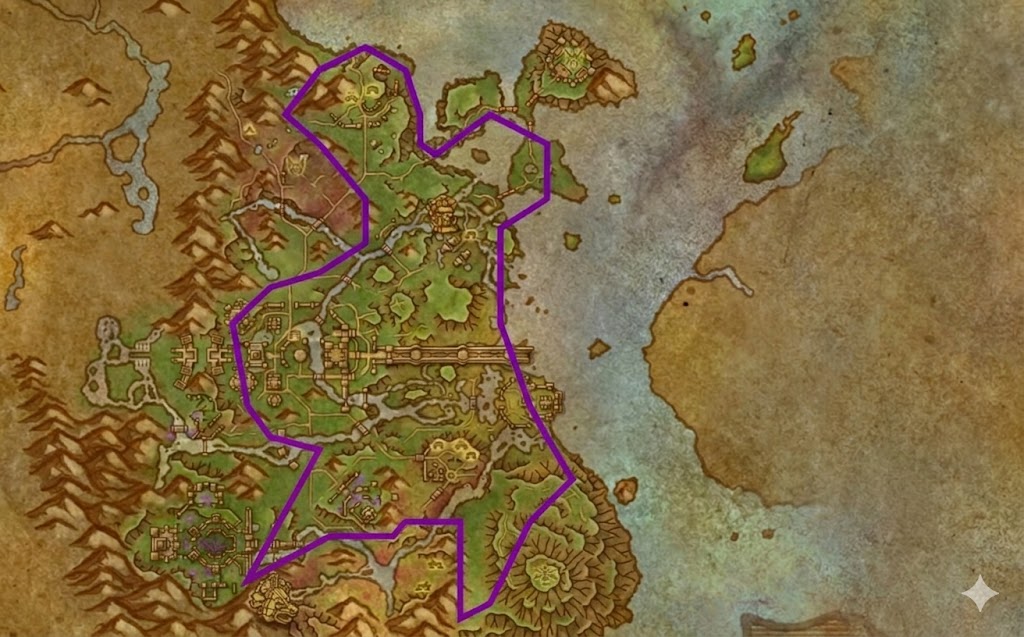
Hug the edges to avoid elevation hell. Wild Overload gives you stuff to kill for extra herbs. Good for rare herb types.
Hug the outer edge in a full loop. Wild Overload gives a buff for additional rare materials, and lashers from wild nodes yield bonus herbs. One of the best zones for mote farming if specced into Overload.

Most herbs of any zone. Figure-eight loop in the middle. Pure volume play.
Two interlocking loops through the central valleys. Highest node density of any zone. Best for pure herb farming without Overload spec. Primal Overload: channel 50% HP for extra motes — don't interrupt the cast!
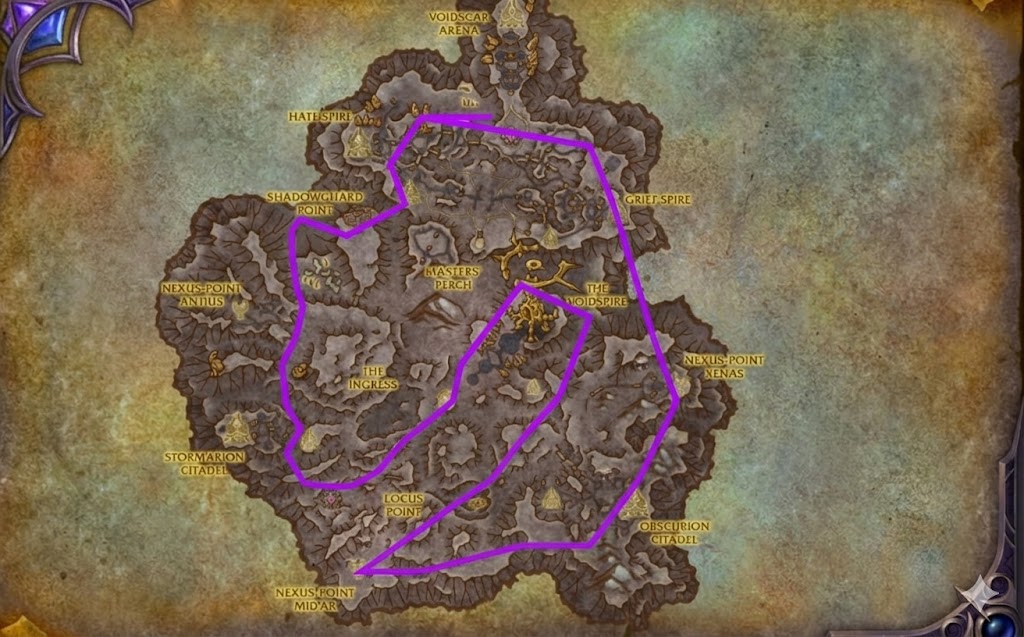
Janky terrain but best mote spawns. Dodge mobs. Best Overload in the game but high risk.
Follow ridgeline paths to avoid mobs. Best for short 10-15 min bursts rather than long sessions. Voidbound Overload is the highest-reward overload type: portal spawns 4 orbs for extra motes and herbs. Campaign completion required for zone access.
Voidstorm has the highest mob density of any gathering zone. Bring self-healing or a tanky spec. Leave fight-heavy areas immediately — dead time kills GPH.
For in-game overlay screenshots of these routes with exact node positions, check Method's Midnight Herb and Mote Farming Routes guide. Pair with GatherMate2 + Routes addons for automated path optimization based on your own gathered node data.
🎯 Prey System
Midnight's new world hunt system — weekly gold, gear, and rare materials
Prey is a brand new world content system in Midnight where you track and hunt specific targets across zones. It's one of the best sources of Petrified Root — a rare, tradeable reagent needed by many crafting recipes and currently selling for premium prices on the AH.
Unlock: Visit Magister Astalor Bloodsworn in Murder Row, Silvermoon City at level 90. Choose a target, then search for clues in the world to find its location.
Select a hunt target, then gather Anguish by completing activities in the target's zone — world quests, killing rares, finding treasures. Once you've gathered enough Anguish, the target's location is revealed on your map. Track it down and defeat it for rewards.
Weekly limit: One hunt per difficulty, per zone. Do 4 hunts per week for maximum reward efficiency — after that, returns diminish significantly.
- Normal: Open-world hunt, other players can help. Good for learning.
- Nightmare: Much harder — target is extremely challenging. Better rewards.
- Torment: Hardest mode — you take stacking 4% damage increase every 60 seconds while not in a rested area. Best rewards.
- Petrified Root: Rare reagent from Prey reward caches. Tradeable on the AH and in high demand — many crafting recipes need it. Higher difficulty = better drop chance.
- Coffer Key Shards: Used in Delves to open Bountiful Coffers for extra loot. Converting Prey rewards into Delve income.
- Preyseeker's Adventurer Chest: Gear drops with a chance at high item level pieces.
- Preyseeker's Journey Track: Progress track with cosmetic and material rewards as you complete more hunts.
- Raw gold: Each hunt completion awards direct gold.
Prey isn't the only source. Petrified Root also drops from:
- Delves: Collegiate Calamity is the easiest to farm at higher depths. Harder depth = better drop chance from reward chests.
- Heroic Dungeons: Chance to drop from the last boss of any Midnight dungeon on Heroic difficulty.
Market tip: Petrified Root is tradeable on the AH. If you're not a crafter, sell your roots directly — prices are inflated in the first few weeks while supply is low.
📜 Legacy Content
Repeatable dungeons and raids from previous expansions with consistent gold and transmog returns
Vendor trash gold. No AH needed. Get a speed set and farm it to death.
- 10 runs per hour with a speed set
- All vendor trash, zero AH interaction
- Great for funding other ventures
- Perfect "brain off" farm while watching content
Run old raids, vendor trash, pray for mounts. Do this on all your alts.
- Firelands 25H — top transmog drops, Pureblood Fire Hawk mount (0.5%), 2-3k raw gold per run
- Blackrock Foundry 25M — Ironhoof Destroyer mount, high vendor gold
- Antorus 25H — Shackled Ur'zul mount, very high vendor gold per clear
- ICC 25H — Invincible's Reins (1%), classic transmog, quick clear
- WoD raids (Mythic) — Highest raw gold per clear of any expansion's raids
- Run on every alt weekly — Warband Bank makes gold pooling effortless
💨 Speed Set Guide
Gear optimization for clearing legacy content faster with higher GPH potential
Move at 240% speed and you'll clear Motherlode in 2 minutes instead of 5. Over 10 runs, that's 30 minutes saved. That's money.
Note: Building a speed set is a mid-to-long-term investment. If you're a brand new player with one character and limited gold, focus on gathering and basic gold-making first — come back to this once you have 50k+ gold and are ready to optimize your legacy farming.
Feral Druids dominate speed farming because Travel Form gives instant mounted speed without dismounting, and Cat Form stealth lets you skip mobs entirely. This combination is unbeatable for legacy dungeon clear speed. Other strong options include Demon Hunter (double jump + Fel Rush for terrain skipping), Monk (Roll spam), and Hunter (Aspect of the Cheetah sprint).
Runner-ups: Demon Hunter (double jump + Fel Rush), Monk (Roll), Hunter (Aspect of the Cheetah)
Horde: Zandalari Trolls get a permanent +5% movement speed racial that stacks with all other speed bonuses. This small multiplier adds up significantly over long farming sessions. Pick this for maximum GPH optimization.
Alliance: Night Elves can shadowmeld to stealth through mobs and skip entire dungeon sections, saving significant time. This is more valuable than raw speed on certain routes. Pick Night Elf for Alliance-side farming.
The backbone of every speed set is BFA Azerite Armor with the Longstrider trait. This gives a permanent ~25% movement speed boost based on your highest secondary stat. You need three pieces (head, shoulders, chest) plus the Heart of Azeroth neck to activate the traits. Farm these on Normal mode only — normal versions give higher Longstrider values.
| Piece | Item | Source |
|---|---|---|
| Chest | Venture Co. Plenipotentiary Vest | Mogul Razdunk — The MOTHERLODE!! |
| Shoulders | Gold-Tasseled Epaulets | Harlan Sweete — Freehold |
| Head | Flashpowder Hood | Overseer Korgus — Tol Dagor |
| Neck | Heart of Azeroth | BFA quest chain from Magni in Silithus |
Longstrider scales off your highest secondary stat. Stack one stat (Critical Strike works best) across all your other gear to maximize the bonus. This means a full Crit set amplifies both your Longstrider speed and your Elusive Blasphemite gem bonus.
- Elusive Blasphemite — primal gem, +2% speed per unique gem color (up to 10% flat speed!)
- Enchant Boots - Minor Speed — +10% movement speed (use legacy boots)
- Enchant Bracer - Chant of Armored Speed — +1000 Speed rating
- Enchant Chest - Accelerated Agility — +250 Speed rating
- Enchant Cloak - Chant of Burrowing Rapidity — +250 Speed rating
- Fill remaining gem slots with Deadly Ruby (Crit) + diverse colors for Blasphemite
- Quickwick Candlestick — on-use +20% speed (from Delves)
- Darkmoon Deck: Vivacity — passive Crit + Speed (cheap on AH)
- Nitro Boosts — Engineering belt enchant, burst speed
- Fried Bonefish — food buff, 20% speed for 5s on every kill
- Charged Phial of Alacrity — +744 Speed rating for 1 hour
- Goblin Glider Kit + Loot-A-Rang — quality of life essentials
For every slot not covered by Azerite gear, buy cheap BoE greens from the AH that have the +Speed tertiary stat. Use Undermine Exchange to search for level 80 items with Speed — filter by armor type and sort by price. Stack Critical Strike as your primary secondary stat across all pieces. For boots specifically, you need legacy boots that accept the Minor Speed enchant — The Sentinel's Eternal Refuge (~200–250k) is best-in-slot, or Shadebound Treads as a budget option.
A speed set costs 50–300k to assemble depending on boot choice, but pays for itself within a week of legacy farming. The Motherlode alone at 10 runs/hour with a speed set generates 10–17k GPH in pure vendor gold. Add in transmog drops from weekly raid clears and you're looking at 50k+ per week across alts — all while half-watching Netflix.
📈 AH Flipping
Pure market play — high risk, unlimited ceiling, requires capital and patience
AH flipping is the art of buying items below market value and reselling at a profit. Unlike farming, it doesn't require killing mobs or leveling professions — but it demands market knowledge, starting capital, and the discipline to be patient. Top "goblins" make millions per week through flipping alone.
With commodities trading on a region-wide AH, you're competing with thousands of other flippers, not just your realm. Margins on commodities are structurally thin because volume is so massive. Instead of trying to undercut your way to profit, focus on buying at genuine lows and selling into genuine demand spikes. The winners are those who buy Saturday and sell Tuesday, not those who fight over 5-gold undercutting wars.
📋 Crafting Orders
Get paid to craft stuff
High-rank crafting produces the biggest tips in week 1 (often 50k-200k per order for rare items) because supply is limited and demand is highest. By month 2 as more crafters reach max rank, tip amounts normalize downward. Rush Knowledge Point progression on day 1 to claim the peak profits before the market stabilizes — delaying by even a few days costs you thousands in potential tips.
The system uses three order types — Public, Personal, and Guild — plus NPC Patron Orders for guaranteed weekly income. Your Artisan Moxie reputation grows as you fill orders, unlocking better Patron rewards over time.
Listed on the crafting order board for anyone to fill. Lower tips but higher volume. Great for leveling your skill and building Artisan Moxie. Public orders have a 30-minute completion timer once claimed — don't claim orders you can't fill quickly. If you fail to complete it, the order returns to the board and your Moxie takes a hit.
Direct commissions from players who trust your skill level. Higher tips (often 5k–50k+ per craft). Build your reputation in trade chat and community discords. Personal orders also support Recrafting — upgrading existing gear quality.
Fulfill orders for your guild members. Tips may be lower but volume is steady. Position yourself as the go-to crafter in your guild for reliable income. Guild orders are visible only to your guild's crafters.
Weekly NPC crafting orders that provide free materials and guaranteed gold + Artisan Moxie. Complete these first every week — they're essentially free income. Higher Moxie unlocks better-paying Patron Orders over time. Check all your alts.
Advertise your max-rank specializations in Trade Chat using a consistent format: list your profession, what items you can craft at max rank, and your expected tip range. Regular players looking for reliable crafters will add you to friends and come back repeatedly. Building a customer base takes work initially but generates steady personal orders that pay more than public order spam.
🔄 Material Shuffles
Multi-profession workflows that buy raw materials and sell processed outputs for profit
A shuffle is a chain of profession conversions that turns cheap materials into higher-value products. Buy ore when prices are low, convert it to gems via Jewelcrafting, cut or use those gems, then sell the output. The profit comes from timing and understanding which conversions have positive margins. The most profitable shuffle changes as the economy stabilizes, so watch the community for the current meta.
Watch r/woweconomy and community guides for the meta shuffle in the first week. Don't try to discover it yourself — by the time you find it, the margins are already ruined. Copy the established shuffle immediately and execute it efficiently. First-mover advantage matters more than innovation here.
Don't build groups from scratch — import community-made ones:
- Official: Visit TradeSkillMaster group-maker for Midnight for pre-built groups
- Community: Search "Midnight TSM groups" on r/woweconomy or the TSM Discord — players share updated import strings constantly
- How to use: Copy the import string → Groups → Import → paste string → instant price tracking for all Midnight materials
Categories to track: "Midnight Herbs", "Midnight Ores", "Midnight Consumables", "Midnight Crafting Materials" — these catch everything you need for pricing decisions.
Step-by-step breakdown of the most reliable shuffle:
- Step 1: Buy/farm Refulgent Copper Ore (cheapest ore) on weekends when prices are lowest
- Step 2: Prospect ore into gems via Jewelcrafting (5 ore per prospect)
- Step 3: Cut gems into rings/necklaces using cheapest settings to maximize volume
- Step 4: Disenchant rings via Enchanting → Enchanting Materials
- Step 5: Craft enchants from materials → sell on AH for profit
Breakeven calculation: (Ore cost × 5) + Prospect cost vs Enchant sale price minus AH cut. If the math doesn't work, the shuffle is unprofitable on your server.
Advanced tracking: Use CraftSim to track which step is most profitable on your server, then specialize KP into that bottleneck profession.
⚠ Requirements: This shuffle requires characters with BOTH Jewelcrafting AND Enchanting — ideal for alt army setup. If you only have one profession, the shuffle is broken at that step.
Vendor shuffles occur when crafted items sell to NPCs for more gold than the raw materials cost. This is an exploit opportunity that usually appears after patches or expansion launches due to incomplete vendor pricing. For example, crafting a trinket for 2000g worth of materials that vendors for 3000g is pure profit. These shuffle opportunities don't last — Blizzard patches vendor prices within days. When you spot one, execute it ruthlessly before it's gone.
Once a shuffle becomes widely known, competition crushes the margins. Week 1 can yield 50%+ returns, but by week 2 competitors flood the market. If you find a good private shuffle before it goes mainstream, you're golden — but expect it to reach zero margins within days as the word spreads. This is why staying ahead of community knowledge is so valuable.
🏠 Housing Decor Crafting
New housing market driven by decorator demand and recipe availability
Brand new in Midnight — no historical data means first movers print money. Housing decor is a volatile market driven by recipe scarcity and player creativity.
- Multiple profession suppliers: Alchemy (level 80+), Leatherworking, Tailoring, Engineering, Blacksmithing, Woodworking all craft decor
- Recipe Rarity: Decor recipes locked behind high profession levels (80+) or rare drops command premium prices early on
- Lumber Bottleneck: Many decor items require Lumber from a limited daily source — this gates supply and keeps prices elevated
- Uniqueness: Items with unique visual effects or animations sell for 5-10× more than basic furniture
- Price behavior: Commands premium prices weeks 1-2, crashes weeks 3-4 as recipes unlock
- Patch opportunity: Watch for housing-related patches and seasonal events — new decor recipes = new profit windows
Risk: Market is completely unknown — prices could crash overnight once more players unlock recipes. Don't go all-in on decor speculation. Sell fast in weeks 1-2, don't hold.
Lumber is the key material gating housing decor crafting, and it cannot be traded or bought on the AH. Every player must farm their own — it's Warbound (shared across your account via Warband Bank).
- Getting started: Buy a Harvesting Hatchet from your Housing vendor (Lestia Goldenstrike at Founder's Point or Xiz'ro at Razorwind Shores). Once equipped, Lumber nodes appear on your map.
- Different types: Each expansion zone drops its own Lumber type. Midnight decor recipes require Midnight-specific lumber from Eversong, Zul'Aman, Harandar, and Voidstorm. Some recipes also need legacy lumber from older zones.
- Costs vary wildly: Small decor items need 5-6 lumber, while large centerpieces can require 50+. Plan your farming sessions around what you want to craft.
- Best class: Druids dominate lumber farming — you can gather while mounted in Travel Form after unlocking the mounted gathering perk (requires farming a bunch of lumber first to unlock it).
- Alt strategy: Park one character in each zone to farm zone-specific lumber types. Mail it via Warband Bank to your crafter.
Gold impact: Since lumber is untradeable, the real gold comes from crafting the decor items and selling those. Your lumber investment translates directly to decor sales — players who can't or won't farm lumber are your customers.
Housing decor commands premium prices only during the first few weeks when recipes are rare. As more crafters unlock recipes, supply increases and prices crater. If you craft decor in week 1, sell immediately at peak prices. Don't stockpile expecting prices to stay high — the market is front-loaded with demand.
🔄 Passive Income
Low-effort daily and weekly activities that generate consistent gold across your account
NPCs offer daily crafting orders with free materials provided. Complete them quickly for guaranteed gold and Artisan Moxie. Takes just 5 minutes per character. Run this on all your alts for multiplied returns — a character with 3 crafting professions can burn through patron orders in 15 minutes for significant daily income.
Most crafting professions have daily or weekly cooldowns that produce valuable items: Alchemy transmutes, Blacksmithing alloy conversions, Tailoring cloth processes, and more. These cooldowns are time-gated but essentially free gold once you've sunk your Knowledge Points. Rotate through all your alts to multiply the returns — each alt with multiple professions generates several cooldowns daily.
Treatises are the most consistent passive income source in the game. Every single player with a crafting profession needs exactly one Treatise per profession per week to earn their guaranteed +1 Knowledge Point. With potentially thousands of crafters on your realm, demand is essentially infinite and prices stay high. If you have Inscription, this is free money every single day.
If you have characters with established mission tables from previous expansions (Legion, BfA, Shadowlands), they continue generating passive gold. Check your table daily and queue up gold missions. This is purely passive if you already have infrastructure in place — don't go out of your way to set up new ones from scratch, but leverage existing ones for free daily gold.
Weekly quests in the Midnight campaign, reputation turn-ins, and legacy raid clears all generate consistent gold. These aren't truly passive since they require active play, but they're repeatable weekly income you'd be doing anyway for progression or transmog farming. Plan your weekly rotation to hit all gold-generating activities on your main and key alts.
🔧 Essential Addons
Software tools that give you information and automation for serious gold-making
The industry standard for AH gold-making. TSM handles pricing operations, automated relisting, sniper scanning for deals, profit calculations, and accounting. It's powerful but complex — the learning curve is steep, but serious goblins invest the time to master it. Free version exists but the paid TSM+ subscription unlocks cloud pricing and advanced features.
- Auctioning operations for automated listing and price management
- Sniper module for finding underpriced items in real-time
- Crafting module with profit per craft calculations
- Accounting to track lifetime income and expenses
- Groups and pricing for organizing your inventory
Don't waste time building your own TSM operation from scratch. Copy proven setups from established community members like Sheyrah or the community guides on the TSM Discord. This gets you up and running in minutes instead of hours of setup.
Essential for crafters. CraftSim calculates profit margins per craft, shows quality probability distributions, and helps you optimize your Knowledge Point spending. Before you craft a single item, CraftSim tells you exactly how much profit you'll make and whether the craft is worth doing. Integrates with TSM for seamless pricing data.
- Profit per craft calculations based on current market prices
- Quality distribution probabilities (what % chance for each quality tier)
- Knowledge point efficiency analysis and leveling path suggestions
- Concentration planning for high-value crafts
- Works seamlessly with TSM pricing
Tracks herb and ore spawn locations on a minimap overlay and can auto-plot optimal routes. GatherMate2 builds a database of node locations as you gather, then Routes can generate efficient farming paths. Combined, they eliminate guesswork and wasted time on inefficient routes. Critical for maximizing gathering GPH.
For Beginners: Start with Auctionator. It's simpler, shows market prices clearly, and has an easy posting interface. You'll learn the AH basics without drowning in advanced options.
TSM (TradeSkillMaster) is the power tool for serious goblins, but has a steep learning curve. After mastering the AH for your first month with Auctionator, graduate to TSM for advanced operations.
Decision point: If you cancel scan more than twice a day, invest the time in learning TSM. Otherwise, Auctionator handles it fine.
The go-to website for market research and price history. Undermine Exchange aggregates AH data from thousands of realms and shows real-time prices, historical trends, and market depth. Use this before making any major crafting or flipping decisions — you can see price trends over weeks and identify whether you're buying at the top or the bottom.
- Region-wide and realm-specific commodity prices
- Historical price graphs showing weekly and monthly trends
- Market composition (how many listings, what's the spread)
- Price filtering by realm tier (US/EU, PvP/PvE)
- Feeds into TSM for cloud pricing data
A powerful real estate tool for identifying what sells best on your realm. Saddlebag Exchange displays heat maps of regional commodity AH data and provides detailed sell-through metrics, helping you find profitable flip opportunities faster. The "Best Deals Search" feature shows region-wide underpriced items waiting to be snatched and relisted higher.
- Heat maps showing what items move fastest per realm
- Region-wide commodity AH data and trends
- Best Deals Search for finding underpriced items to flip
- Helps identify which markets have margin potential
Visit: saddlebagexchange.com/wow
💹 Economy Tips
The mental models that separate 100k players from millionaires
Buy Saturday, sell Tuesday. This is the golden rule applied: farmers dump supply on weekends (prices bottom), raiders panic-buy Tuesday (prices peak). Every strategy in this guide revolves around this cycle. The actionable version: gather and buy materials Friday-Sunday, craft Monday night, list Tuesday morning before reset.
Token prices follow predictable expansion cycles: Tokens are cheapest at expansion launch (everyone buying game time = high supply) and most expensive during mid-tier raids (player drops = fewer tokens listed). Track token price trends — they indicate economy health and opportunity windows.
- Converting gold → game time? Wait until mid-season when tokens peak
- Buying tokens for gold? Buy when cheap, more gold per token is always better
- Real-time pricing: wowtoken.info
Different item types require different strategies: Commodities (herbs, ore, cloth) trade region-wide with infinite supply—focus on volume with small margins. Server-specific items (crafted gear, transmog, pets) offer arbitrage opportunities across realms. Focus your energy where you can actually move the needle.
When to hold vs when to dump: HOLD consumables (flasks, potions, food) and materials with daily cooldowns—supply is finite and demand is guaranteed. DUMP common gathering materials and rapidly depreciating items—supply only increases. SELL STEADY on enchants, gems, and consumables—always in demand.
New patches create temporary profit windows: Information is scarce and demand patterns shift rapidly. Stockpile materials before a patch drops — the first wave of crafters with max recipes and materials locked in make enormous profits before competition floods in. By day 3-4, margins normalize. By week 2, the meta settles and easy money is gone.
Launch reality: The economy stabilizes quickly as the full player base joins. Focus on identifying persistent demand patterns—consumables, enchants, crafted gear—rather than betting on one-time supply crashes. Blizzard can hotfix material requirements overnight, making stockpiles worthless—diversify rather than going all-in.
Server population matters: High-pop realms have more competition but also more volume and faster turnover. Low-pop realms have less competition but slower sales. Choose your server based on your playstyle.
Alt stacking strategy: Top goblins run 4-5 alt armies with stacked profession chains to reduce crafting costs and maximize passive income. The winning setup depends on your goal—direct crafting profits or passive material conversion.
Quality gating: True profit concentrates at the top tier. Invest Knowledge Points wisely to reach max quality first, then sell into early demand before competition catches up.
✅ Daily Gold-Making Checklist
Structured routine to maximize income without burning out
📖 Glossary
WoW economy and crafting terminology explained
The progression currency for profession specializations. You earn KP weekly from quests, Treatises (purchased or crafted), Patron Orders, and world treasures. The system is heavily time-gated — each profession can gain only a fixed amount of KP per week, so everyone advances at roughly the same pace regardless of playtime. This prevents paying more gold from outright skipping progression.
Your reputation track as a crafter. Complete crafting orders and your Moxie increases, unlocking access to better-paying Patron Orders and raising the tips players will offer on commissioned crafts. Abandon or fail orders and your Moxie decreases, locking you out of high-tier work. Moxie is account-wide, so your reputation matters.
A limited account-wide resource that guarantees a craft will produce maximum quality result. Each craft uses one Concentration. You regenerate a small number per day, but can't stockpile more than a few. Use Concentration only on high-value crafts where the quality difference (Rank 4 vs Rank 5) creates massive price variance. Wasting Concentration on low-margin items is a costly mistake.
Weekly consumable items that grant +1 Knowledge Point to a specific profession. Every player with crafting professions needs exactly one Treatise per profession per week. Since there are hundreds of crafters per realm all needing them weekly, Treatises have massive consistent demand and are one of the highest-volume items on the AH. Inscription makes them — if you're an Inscriber, this is free money every single day.
Player-to-crafter commissions. Players submit orders with their materials and a tip, you craft the item, they receive it. Public orders are listed for anyone, Personal orders are direct commissions. Higher Artisan Moxie unlocks better-paying Patron Orders from NPCs (guaranteed gold, provided materials). Completing orders successfully builds your reputation; abandoning or failing orders damages it. The system replaced the old crafting quest model.
Upgrading an existing crafted item to a higher quality tier using the same profession. Instead of crafting brand new gear, players submit their existing item plus materials for upgrade. Recrafting uses fewer materials than crafting from scratch, so players prefer it (cheaper), and crafters profit on the tip while using less resources. It's a lower-barrier entry into crafting orders for new crafters.
Profession-specific perks unlocked by investing Knowledge Points into specialization trees. Examples: Miners get free ore procs from smelting, Alchemists get bonus flask procs, Tailors get bonus cloth. These passives scale with specialization investment — deeper specs = more procs over time. They're a core part of profession profitability and why Knowledge Point allocation matters strategically.
The primary metric for measuring gold-making efficiency. Calculate it by dividing total profit by time spent, factoring in AH cut (the 5% fee Blizzard takes from all AH sales). A farming method that generates 1,000,000 gold in 10 hours = 100k GPH. Compare GPH across different methods to optimize where you spend your time. Always include AH cut in calculations or you'll overestimate profits.
🔗 External Resources
Bookmarkable links for market research and profession planning
- Undermine Exchange — Real-time AH prices, historical trends, and market depth across all realms
- Saddlebag Exchange — Heat maps, sell-through metrics, and Best Deals search
- WoW Token Info — Live token price tracking
- Wowhead Professions Guide — Complete profession breakdowns and knowledge trees
- Wowhead Midnight Hub — Expansion-wide guides and databases
- Icy Veins Professions — Alternative profession guides with leveling paths
- Method Farm Routes — In-game overlay screenshots with node positions